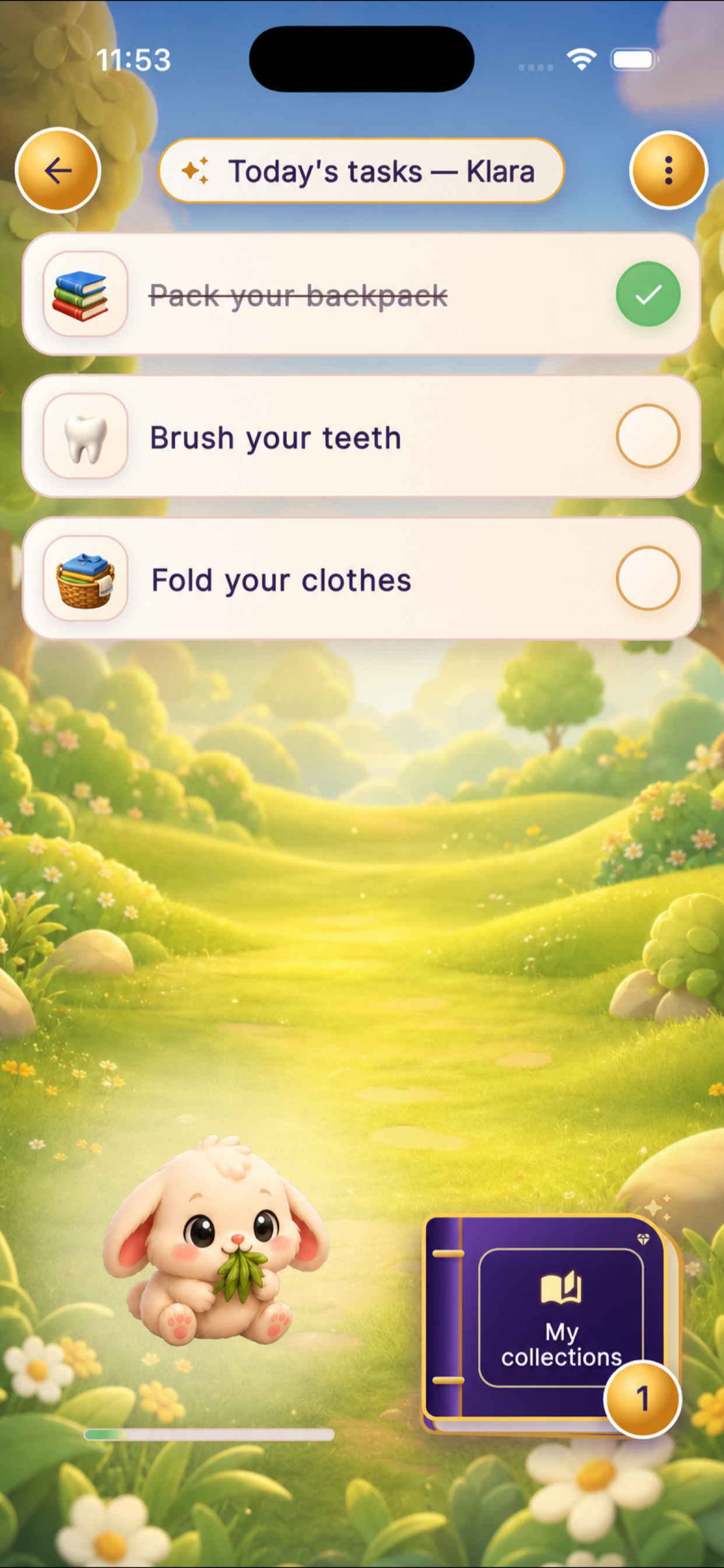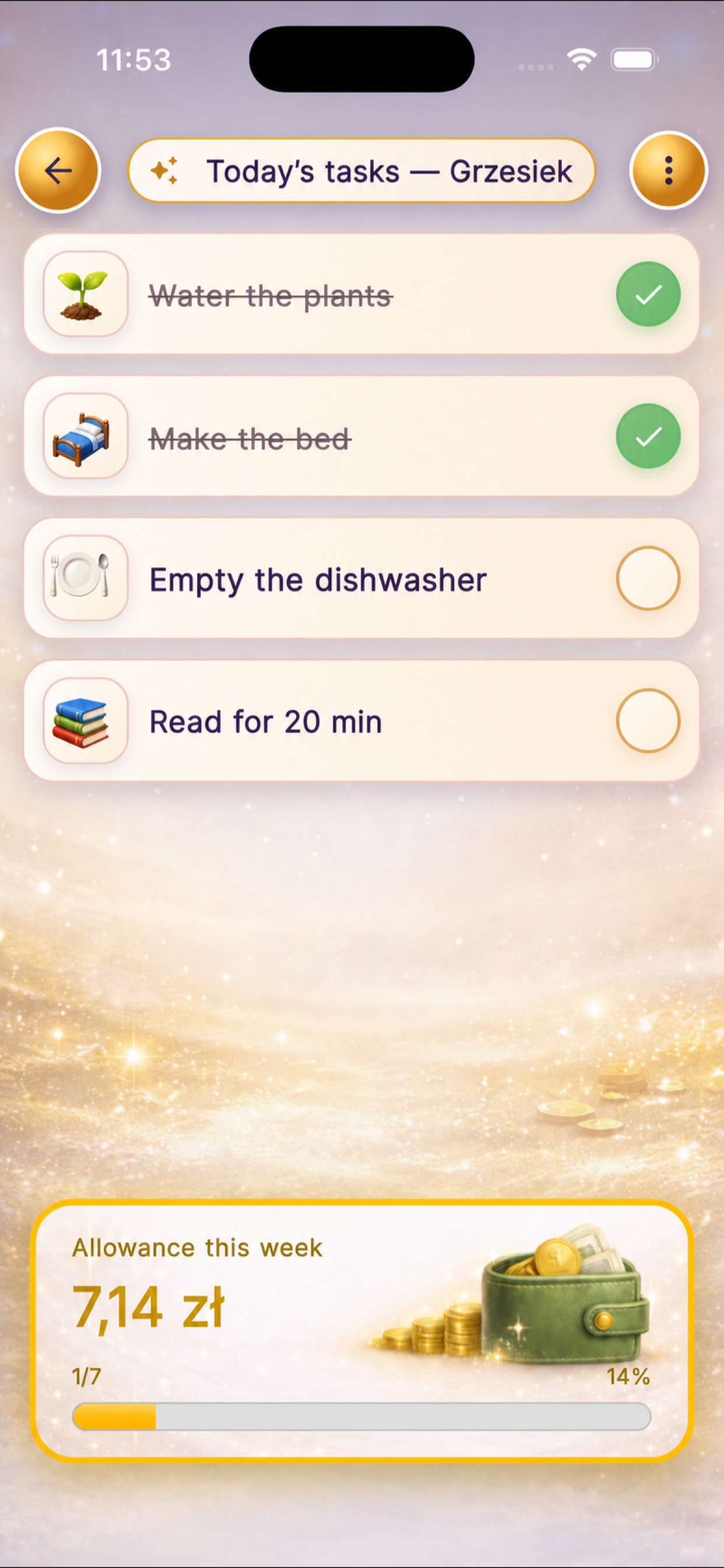
At age 13–15, you need to be very careful that the task system doesn't become infantile or overly controlling. An older child doesn't want to be treated like a much younger child with a colourful checklist. What matters far more to them is: autonomy, specifics, a sense of influence, and fair rules.
That's why at this stage, the narrative "do the task because your animal is growing" doesn't work as well. What works better is: "this is your area of responsibility." An older child can respond well to a clear system, but only when they see the point. They should know which tasks are part of their daily responsibilities, which ones are regular and which are extra, and what the approval rules are.
An important distinction here is between core responsibilities and additional tasks. Basic things like hygiene, getting ready for school, or looking after their own belongings shouldn't be presented as a big event rewarded every time. They're more of a natural part of growing up and daily responsibility. On the other hand, some additional or more demanding tasks can be meaningfully linked to pocket money.
And this is exactly where allowance makes sense — not as payment for every basic activity, but as a first lesson in the connection between responsibility and outcome. Through this, an older child can learn something very important: that money doesn't come from nowhere, but is tied to regularity, keeping agreements, and completing specific tasks.
This can be a good introduction to understanding work, budgeting, and financial responsibility. But only if the parent doesn't overdo it. If everything becomes paid, the child will quickly start thinking exclusively in terms of "what do I get for this?" And that's a weak direction. It's better for some responsibilities to come from naturally participating in family life, while others are connected to greater responsibility and a concrete reward.
At this age, it's also particularly important to gradually give the child more control. It's good if the system not only shows tasks but also helps the older child orient themselves in their own responsibilities. The parent shouldn't be the eternal operator of every activity anymore. The older the child, the more the app should support independence rather than constant supervision.
A well-configured system for this age group isn't meant to turn an older child into an obedient follower of commands. It's meant to help them enter the world of responsibility, regularity, and first rules that truly resemble adult life.