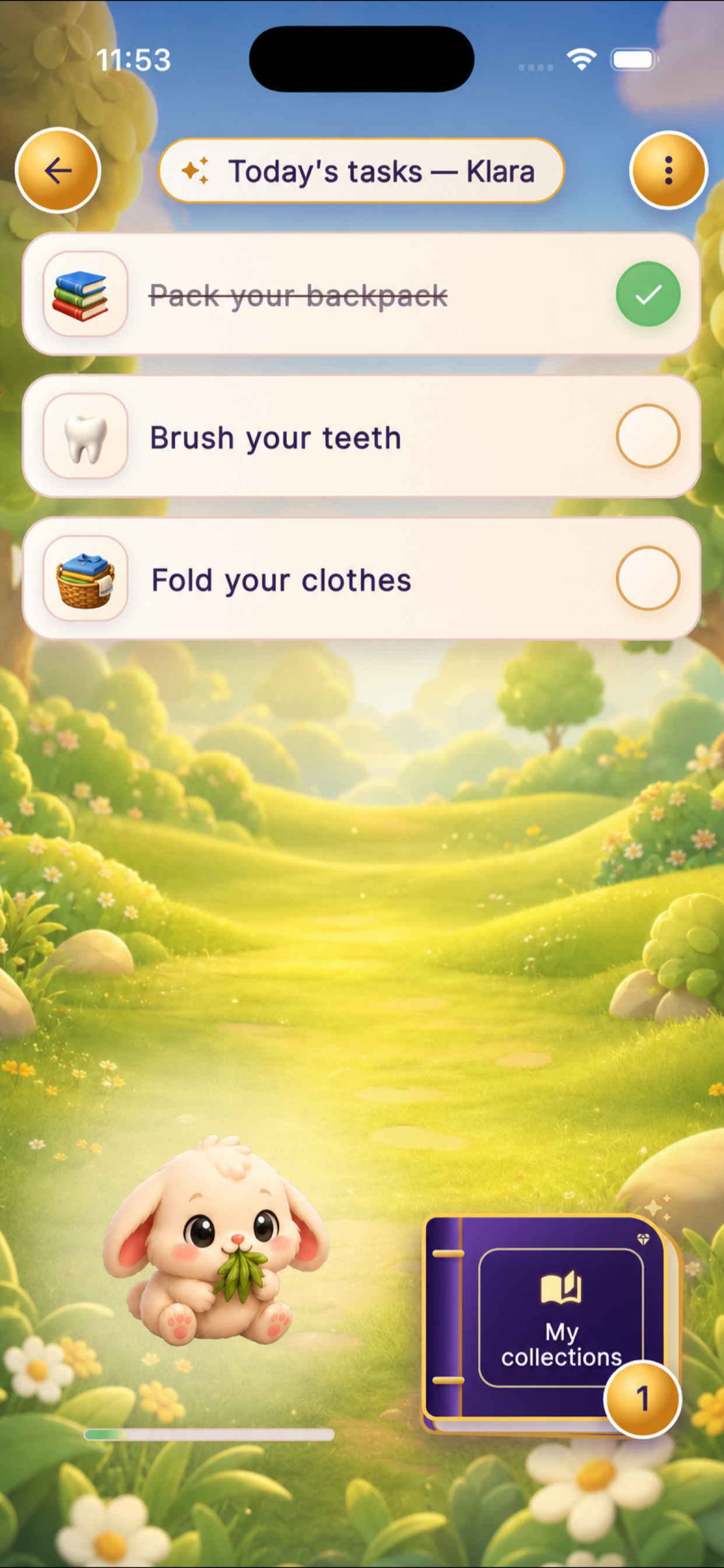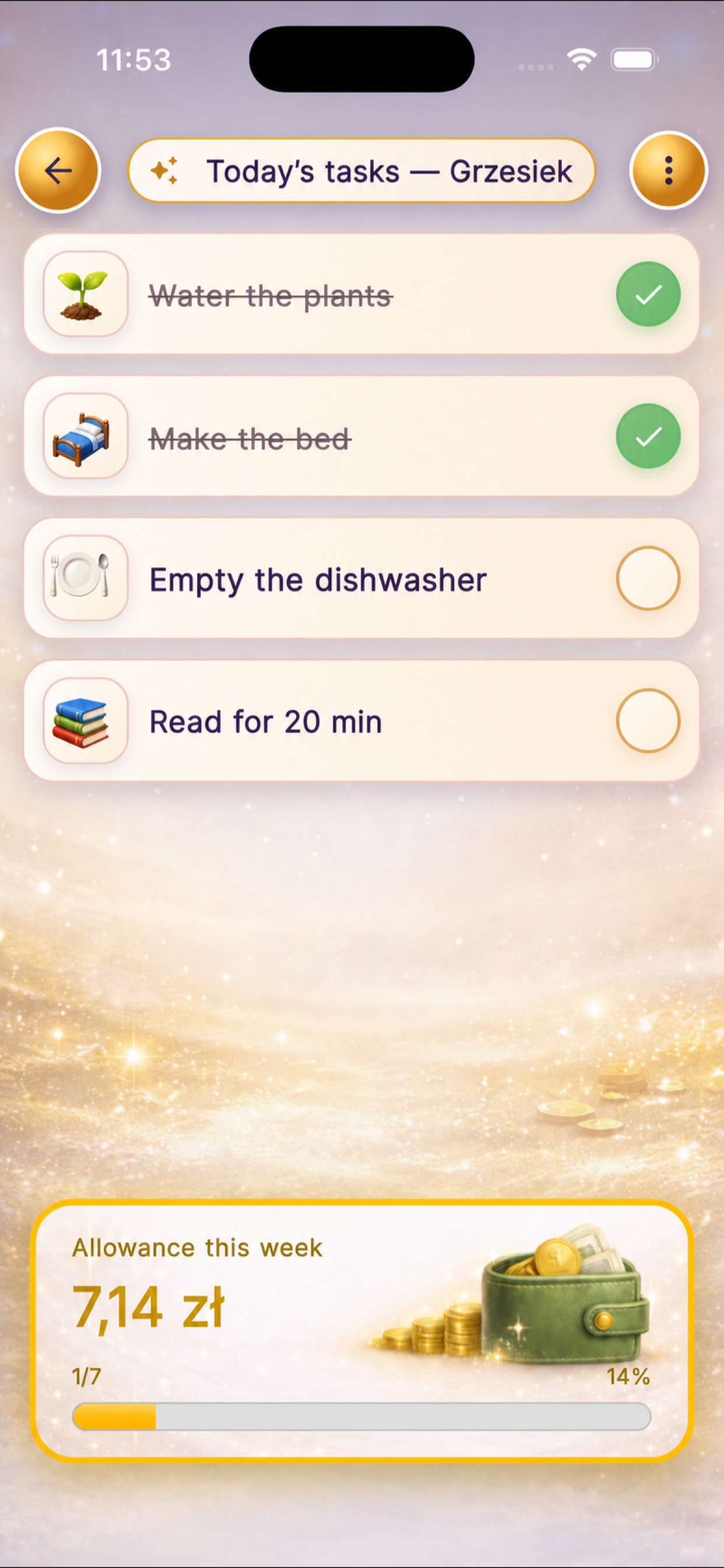
At age 9–12, a child can already do much more than before, but they're still easy to overload. This is the stage where you can realistically build consistency — but only when tasks are well chosen and introduced gradually.
The most important thing is not to throw everything in at once. Parents often think: "since the child is older now, it's time to finally organise the whole day." And then the list includes teeth, making the bed, packing the bag, homework, tidying the room, clothes, dishes, helping at the table, and several more things. The result is usually the opposite of what was intended: instead of independence, there's chaos and resistance.
A much better approach is to introduce a few key tasks, then add more only when the previous ones have started to become routine. At this age, the child is already able to understand a simple system: "these are my responsibilities," "I know when to do them," "I can see that I'm managing."
Tasks should still be specific, but you can start introducing slightly more responsibility. Things like packing their school bag, preparing things for the next day, organising their own space, clearing dishes, or small household chores work well. At this age, a child needs not just reminders, but also the feeling that they have a real role in the family's daily life.
Motivation can still be based on visible progress and rewards, but a sense of agency becomes increasingly important. The child should see that tasks aren't just a list of commands, but something they can genuinely handle. That's why it's good when the system shows progress and gives the child the feeling: "I can manage my responsibilities."
A very important rule is: remove from the system what has already become a habit. If a child has been remembering about teeth or their school bag on their own for a while, there's no need to keep reinforcing it endlessly like a new challenge. It's better to make room for the next developmental step.
At this age, a well-functioning system doesn't teach a child perfection. It teaches something more important: that daily responsibilities can be done regularly, without a daily war over every little thing.