At age 6–8, a child is usually ready for a clearer routine. They can read simple instructions, remember familiar steps, and understand that responsibilities happen at specific moments of the day. They still need short lists and visible feedback, but the work can feel more like a real role than a reminder from an adult.
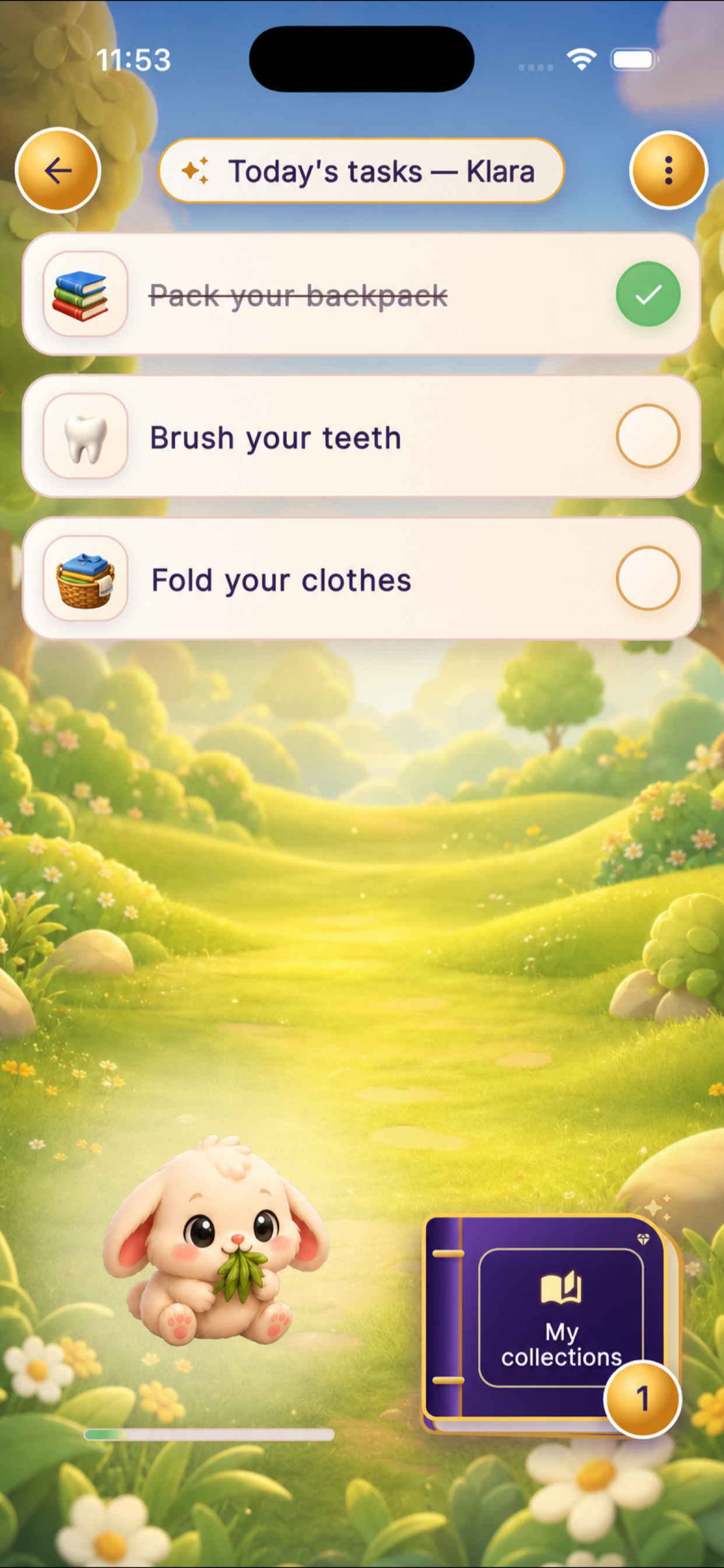
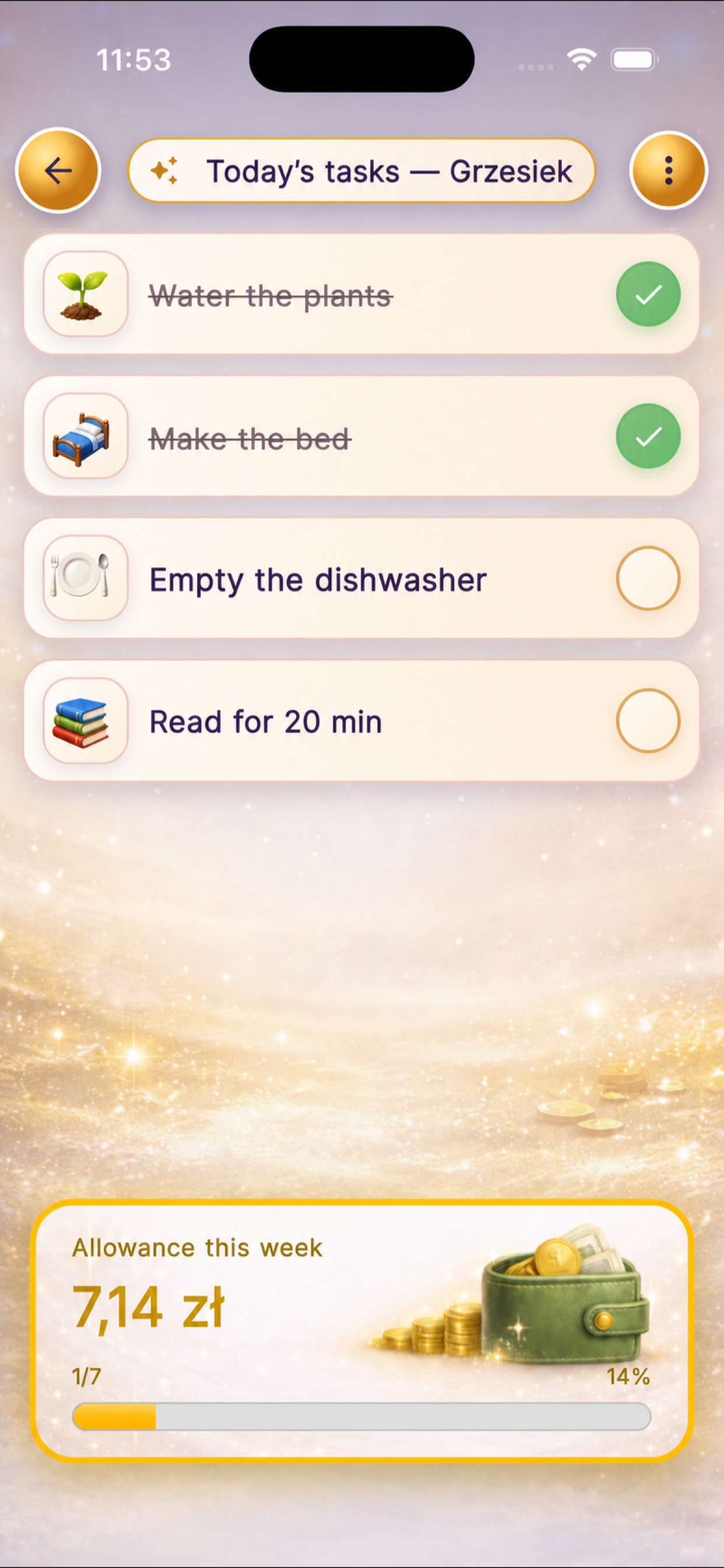
Good tasks for this age are concrete and useful: pack the school bag, put clothes in the laundry basket, set out clothes for tomorrow, clear dishes after a meal, feed a pet with supervision, or tidy one chosen area. The task should still be specific, but it can include two or three clear steps.
The common mistake is turning the whole week into a checklist. A child this age can handle more than before, but too many duties at once still makes the system feel heavy. Start with three to five recurring tasks, then add one new responsibility only when the previous ones feel natural.
Visible progress still matters. At this age, rewards work best when they make effort understandable rather than replacing the reason for helping. A character, collection, or world can show: I did the work, it counted, and I am getting better at managing my day.
Parents should use the app as a shared routine, not a remote-control tool. Review tasks together, approve what is done, and remove items once they become automatic. The goal is not a permanent checklist. The goal is helping the child build independence one responsibility at a time.
The best setup is clear: a few predictable tasks, short instructions, and enough ownership for the child to feel capable.