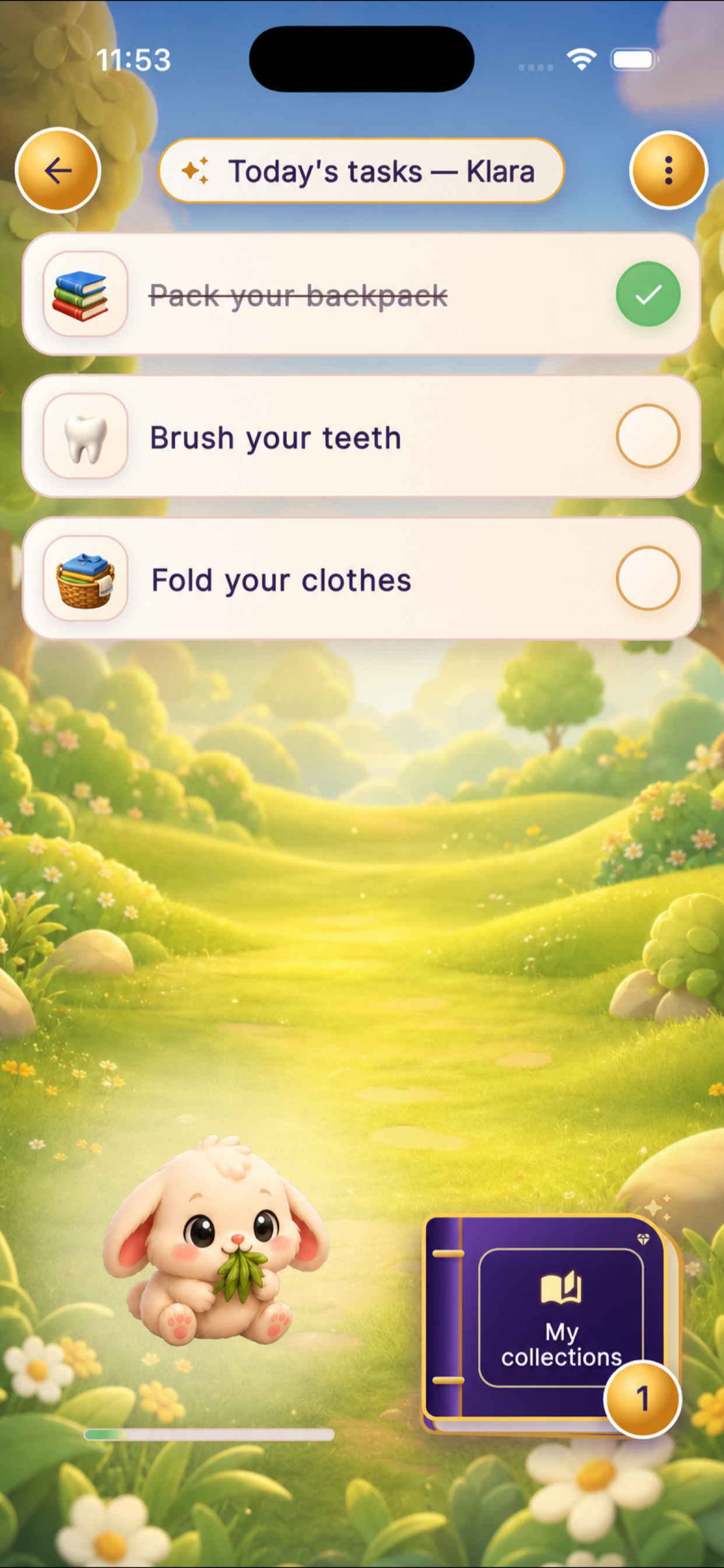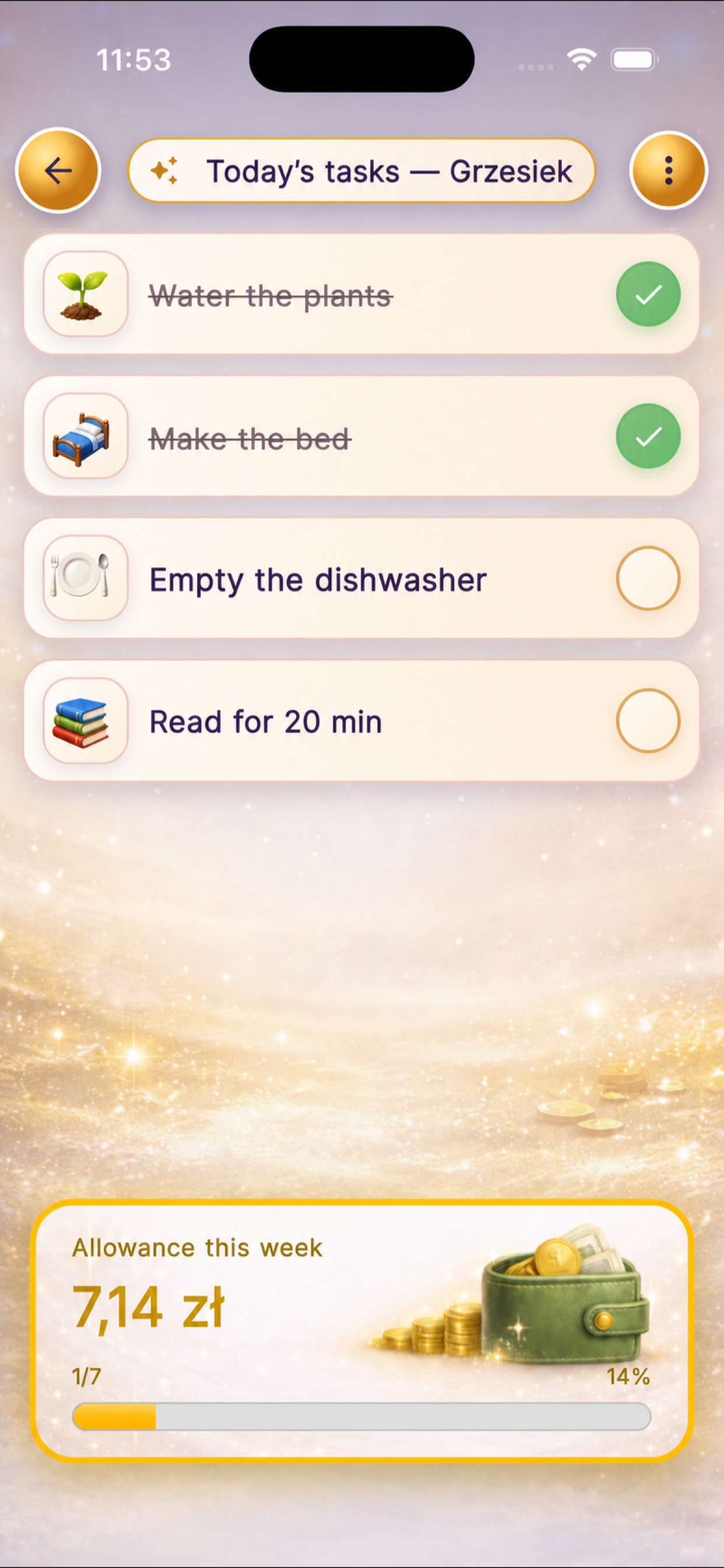
Many parents know this pattern all too well: mornings are a rush, afternoons bring homework, evenings mean teeth, cleaning, bath time — and in the background, the same reminders repeated a dozen times a day. The problem usually isn't that a child "refuses to cooperate" on principle. More often, it's that children are still learning consistency, self-control, and how to anticipate the consequences of their actions. This isn't a trait we're born with. It's a skill that needs to be built gradually. Regular, predictable routines help enormously, because they reduce chaos and support the development of independence and self-regulation.
Consistency doesn't start with willpower
Adults often think of consistency as a matter of character: either someone is disciplined or they're not. With children, it works differently. A child rarely completes a task because they have a long-term vision of the benefits. Far more often, they respond to what's clear to them right here and now: a simple plan, a predictable sequence, visible progress, and quick feedback. From a behavioural psychology perspective, regularity emerges more easily when an action is embedded in a stable context and repeated in a similar way. It's precisely from such repetition that habits form — meaning the behaviour is performed with decreasing mental effort.
Why routines actually work
Predictable routines organise a child's day. When a child knows what comes after what, they spend less energy negotiating, procrastinating, and resisting. This matters because self-regulation in children is still developing and can easily be overwhelmed by too many decisions, emotions, and stimuli. The American Academy of Pediatrics emphasises that children function best when their daily life is regular, predictable, and consistent, and that well-structured routines support a sense of security, independence, and reduce challenging behaviours.
This means consistency doesn't come from simply telling a child what to do. It grows when the task becomes part of a repeatable system. "Brushing teeth" as a daily argument creates tension. "Brushing teeth" as a fixed element of the evening sequence is far easier for the brain to consolidate.
The role of rewards: not bribery, but activating motivation
Here's where an important question arises: don't rewards undermine motivation? The answer is: they can — but they don't have to. Research on self-determination theory shows that motivation grows most healthily when a child feels three things: agency, competence, and connection. In other words: "I have influence," "I can do it," and "someone important supports me." Rewards begin to cause harm when they're used purely as pressure or control. But when they're part of a meaningful system of progress, feedback, and effort reinforcement, they can help a child get into the rhythm of action.
This is an important distinction. A well-designed system doesn't tell a child: "do this, or you get nothing." It says: "you can see your goal, you can see your progress, and you know your effort matters." This difference might seem subtle, but psychologically it's enormous. Autonomous motivation is linked to greater persistence, better engagement, and a stronger willingness to maintain behaviour over time.
What makes a child come back to the task the next day
Consistency is built not by one big push, but by hundreds of small repetitions. That's why an effective system for a child should have several elements: a clear task, a simple moment of execution, visible progress, and a repeatable reward or reinforcement. Research on habit formation and action planning clearly shows that specificity helps more than general resolutions. It's easier for a child to establish the routine "after dinner I brush my teeth" than to follow the abstract "I need to take better care of my hygiene."
In practice, this means children are more consistent when:
- they can see what they need to do,
- they know when to do it,
- they receive quick confirmation,
- and a completed task brings them closer to a concrete goal.
This is exactly why simple reminding often loses to a well-designed system.
Why an app can work better than a chart or sticker board
Charts, stickers, and motivational boards have one weak point: they quickly become background noise. The child gets used to them, and the parent still has to serve as the "engine of the whole system." A digital solution has the advantage when it takes over part of that mechanics: it shows tasks, organises progress, reinforces regularity, and gives the child a sense that they're actively participating in the process, rather than just receiving orders. Research on gamification in children suggests that a system of points, progress, and digital rewards can increase engagement, as long as it doesn't strip the child of their sense of autonomy and purpose.
That doesn't mean an app does the work for the parent. And it's worth being honest here: no system will make every child suddenly and effortlessly love all their chores. But a good system can significantly reduce friction. Instead of constant reminding, the parent gets structure, and the child gets a clear mechanism of action and reward. That's often enough to turn chaos into rhythm, and rhythm into the first real consistency.
How this translates to everyday life
In practice, a well-functioning system supports a child on three levels.
First, it organises the day. The child guesses less and negotiates less, because they know what their responsibilities are.
Second, it strengthens their sense of effectiveness. When a child sees they can complete a task and move closer to a goal, their sense of competence grows — and that's one of the most powerful drivers of lasting motivation.
Third, it shifts energy from conflict to cooperation. The parent doesn't have to constantly be the "voice of duty," because the system becomes external support for daily routines. It doesn't completely eliminate difficult moments, but it often means there are fewer of them. This conclusion is consistent with paediatric recommendations on predictable routines and supporting a child's independence.
Most importantly: the system should lead to independence, not dependence on rewards
A well-used reward system shouldn't keep a child at the level of "I only do things for rewards." Its role is to help them get started, maintain regularity, and gradually build an internal conviction: "I can," "I remember," "this is my task." At the beginning, motivation tends to be more external. That's normal. Over time, if the child experiences success, agency, and predictability, some behaviours begin to stabilise. This is exactly how consistency is born: not from pressure, but from well-guided repetition.
Summary
Children don't become consistent because someone tells them ten times louder. They become more consistent when they have clear rules, predictable routines, visible progress, and age-appropriate motivation. Such a system doesn't replace the parent, but it can relieve them of the role of constant reminder. And that's often the first step towards a calmer daily life — and a child who increasingly remembers their responsibilities on their own.